
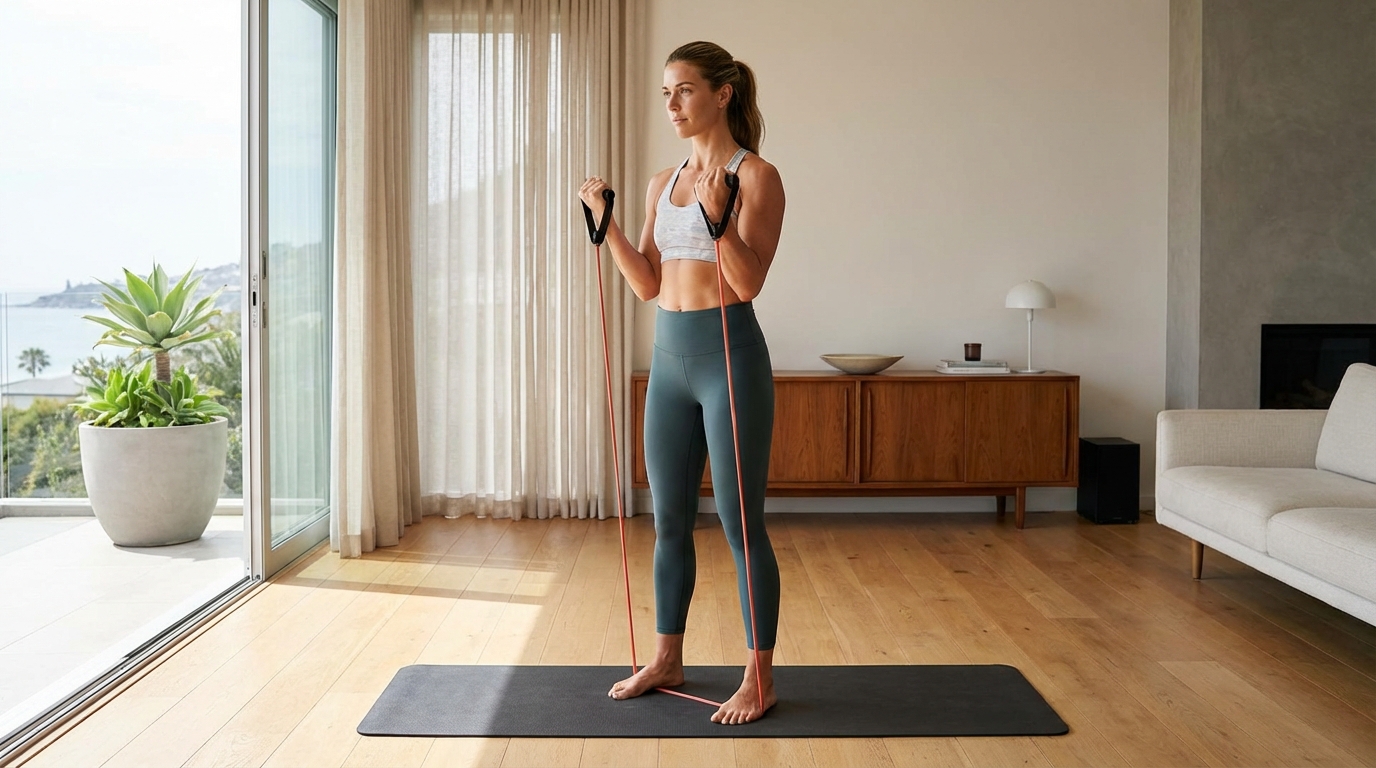
If you’re interested in starting an at home strength workout or seeking ways to make your existing strength training workouts at home more effective and safe, this resource is designed for the Australian public, including patients, carers, or anyone health-conscious. This article provides information to help you understand the benefits, key considerations, and potential risks of exercising without leaving home. It is for general informational purposes only and is not a substitute for advice from your healthcare provider. By reading on, you’ll learn how to build muscle, improve bone health, and avoid common pitfalls of home-based strength training, all within the Australian context.
Building Strength at Home: Evidence-Based Guidance for Australians
Understanding At Home Strength Workouts: What Are They and Why Do They Matter?
An at home strength workout refers to exercises that use your own bodyweight, household items, or simple equipment to improve muscle strength and endurance—all within your home environment. The main purpose of these workouts is to support better health, prevent muscle loss, and increase independence, as highlighted by Australian Department of Health guidance.
For the general public, including older adults and people with sedentary lifestyles, strength training can help reduce the risk of chronic conditions like osteoporosis, type 2 diabetes, and heart disease. By focusing on movement patterns such as squats, push-ups, and resistance exercises, you’re supporting the maintenance of muscle mass, joint function, and overall wellbeing. Combating Tablet Fat requires regular and mindful at-home movement.
Importantly, strength training workouts at home are highly adaptable—meaning almost anyone can start, regardless of age or fitness level. However, there are some crucial safety factors and risk considerations (explored further in this article) that every individual should understand before beginning or making changes to their exercise routine.
Common Symptoms and Warning Signs to Watch For When Exercising at Home
Understanding your body’s responses during an at home strength workout is essential. While slight fatigue and mild muscle soreness are normal, there are warning signs that might suggest an unsafe workout environment or a need to pause activity.
| Possible Symptom | What It Can Indicate | Recommended Action |
|---|---|---|
| Sharp or shooting pain | Potential injury or poor technique | Cease activity, consult health professional if pain persists |
| Shortness of breath (unusual) | Overexertion or underlying health concern | Stop workout, rest, seek advice if ongoing |
| Dizziness, faintness | Poor hydration, low blood pressure or overexertion | Stop, hydrate, rest, consult GP if symptoms recur |
| Joint swelling or restricted movement | Inflammation, strain injury | Apply ice, rest, seek medical assessment if unresolved |
If you experience any of these symptoms, reduce activity and consider consulting your regular doctor, particularly if symptoms do not resolve with rest. In some cases, these can point to deeper health issues or underlying medical conditions.
What Causes Common Strength Training Issues at Home?
At home strength workouts are generally safe, especially when following standard guidelines from organisations such as Heart Foundation. Still, several factors can contribute to muscle strains, injuries, or slow progress during home-based routines:
- Poor exercise technique—without professional supervision, form errors can increase overuse injury risk.
- Skipping warm-up and cool-down—leaving out these steps can make muscles more susceptible to strain and slow recovery.
- Lack of progressive overload—repeating the same weights or exercises without progression can lead to a plateau.
- Using unsuitable equipment or household objects—improper weights or furniture can cause accidents.
- Ignoring rest or recovery periods—not allowing time for muscle repair raises injury likelihood and diminishes results.
Understanding these causes helps reduce setbacks and supports ongoing motivation for your strength training workouts at home. If you’re unsure about your exercise form or experience setbacks, you may benefit from guidance by a certified exercise professional.
Who Is Most at Risk from Home-Based Strength Workouts?
While strength training is beneficial for almost everyone, certain groups face a higher risk of adverse effects when starting or increasing the intensity of an at home strength workout. Those in higher risk categories should take extra precautions and may benefit from a check-up or tailored advice from a physiotherapist or general practitioner.
| Risk Group | Specific Considerations |
|---|---|
| Older Australians | Higher risk of falls, sarcopenia, joint problems. Begin with seated or supported exercises if unsure of balance. |
| People with chronic illness | May require medical clearance—especially with cardiovascular, respiratory, or musculoskeletal conditions. |
| Those new to exercise | Greater chance of muscle soreness, technique errors, or overtraining. |
| Pregnant individuals | Seek specialist advice for appropriate modifications. |
| Children and teenagers | Require age-appropriate, low-risk routines that support healthy growth. |
It’s important for individuals in these groups to monitor their symptoms and progress carefully—and to seek professional advice if in doubt. For many, low-intensity routines and gradual progress are safest and most effective.
Key Prevention & Management Principles for Safe Strength Training Workouts at Home
Preventing injuries and ensuring long-term benefits from at home strength workouts comes down to adopting evidence-based habits from the start. According to Exercise & Sports Science Australia, the following management principles can reduce risk and enhance effectiveness. For those seeking muscle gains, our Building a Body resource addresses at-home strategies.
- Begin with a structured routine that covers all major muscle groups at least twice per week.
- Prioritise controlled movements and technique over speed or quantity.
- Use appropriate equipment, such as resistance bands or small dumbbells, and avoid unsafe household items.
- Incorporate mobility, balance, and stretching activities into your overall plan.
- Allow at least 48 hours between sessions targeting the same muscle group for adequate recovery.
| Management Approach | Benefits | Possible Limitations |
|---|---|---|
| Structured routine | Reduces missed exercises and optimises progression | May need modification for chronic pain or disability |
| Professional guidance | Supports safe technique and adaptation | Can be costly or require digital appointment |
| Online programs (Australian based) | Convenient access and community support | Quality and supervision may vary |
Consistent self-assessment and a willingness to modify your approach if discomfort occurs are key. If you’re unsure about any exercise, especially when progressing in weight or intensity, arranging a virtual check-in with an accredited exercise physiologist may be worthwhile.
Practical Checklist: Preparing for a Safe At Home Strength Workout
Before starting or progressing your strength training workouts at home, use this health and prevention checklist to guide your planning:
- Have you cleared your training area of trip hazards and clutter?
- Do you have well-fitting, supportive footwear and comfortable clothing?
- Is your equipment (bands, weights, mats) in good condition and used as recommended?
- Do you understand proper form for your chosen exercises?
- Have you included a 5–10 minute warm-up and cool-down in your plan?
- Are you aware of how to pace yourself, modify, or stop based on your symptoms?
- Do you have a water bottle and phone nearby in case of emergency?
This checklist can be printed or saved to help reinforce safe habits each time you train.
Choosing the Right Exercises: Safe and Effective Options for All Levels
Selecting the right movements is vital, particularly if you have not previously participated in regular physical activity. Here are several safe, adaptable exercises commonly included in Australian at home strength workout plans:
- Squats—Can be performed with body weight, a chair (sit-to-stand), or holding light objects.
- Push-ups—Either against a wall, on knees, or full push-up depending on strength level.
- Plank holds—Support core muscles. Start with short intervals and progress gradually.
- Glute bridges—Improve hip and lower back strength.
- Resistance band rows—Excellent for upper back and posture.
For comprehensive options, the Better Health Channel offers evidence-backed examples tailored for different ages and abilities. For upper body strength, integrate movements from our Upper Body Weight Exercises tutorial.
Limitations: If you have specific injuries, movement restrictions, or chronic pain, always select or adapt movements to accommodate your condition. If symptoms worsen, stop and seek medical assessment.
Safety Concerns, Misinterpretation Risks and When to Seek Medical Help
Even well-intentioned routines can carry risk if undertaken without proper understanding or necessary adjustments. Here’s what to consider:
- Previous injuries: If you’ve had significant injuries (like shoulder, knee, or back issues), avoid exercises that feel unstable or painful, and ask your doctor before beginning a new routine.
- Misunderstanding pain vs. muscle fatigue: Mild, temporary soreness is typical; sharp, prolonged, or worsening pain may signal injury and should prompt a pause and medical assessment.
- Medical conditions: Some health conditions (e.g. heart disease, respiratory illness, severe arthritis) require individualised programs—discuss any changes with your GP first.
- Following unverified sources: Exercises seen on social media or unregulated online videos may not be safe or suitable for your needs.
If you develop lingering pain, swelling, shortness of breath, chest discomfort, extreme fatigue or dizziness during or after exercise, stop immediately and consult a qualified health professional via Healthdirect Australia. In an emergency, dial 000 for urgent assistance.
| Scenario | When to Seek Help |
|---|---|
| Repeated joint or muscle pain | If pain does not improve after rest, or recurs with exercise |
| Persistent dizziness or chest discomfort | Stop exercise and seek immediate medical assessment |
| Any new or unexpected symptoms | If unsure, contact your GP or qualified health advice line |
FAQ
What are the most important safety tips for at home strength workouts?
Key safety tips include starting with a proper warm-up, using correct form for every exercise, progressing slowly, and never sacrificing technique for extra repetitions or weight. Have a clear space free of obstacles, use well-maintained equipment, and stop if you feel pain rather than mild soreness.
Do I need any special equipment for strength training workouts at home?
Most people can start with just their own bodyweight or everyday items like water bottles. For ongoing progress, resistance bands or adjustable dumbbells are beneficial but not strictly required. Always use equipment as intended and avoid makeshift weights that could cause injury.
How often should I perform strength training workouts at home?
For general health, Australian guidelines suggest at least two sessions per week targeting all major muscle groups, with 48 hours rest between workouts for the same muscle group. Adjust frequency according to your age, fitness level, and overall wellbeing.
When should I seek medical or professional advice before starting a new workout?
Seek advice if you have a history of chronic illness, injuries, heart or respiratory problems, or if you’re unsure how to adapt exercises to your individual needs. Pregnant individuals and older adults in particular may benefit from tailored professional input.
Can strength training at home help with long-term health and prevention?
Yes, consistent strength training is linked to lower risk of falls, increased muscle and bone strength, better cardiovascular health, and reduced risk of chronic diseases. Benefits occur gradually and depend on regular participation and safe, appropriate progression.
If you need even gentler options, see our Chair Exercises for Seniors.

