
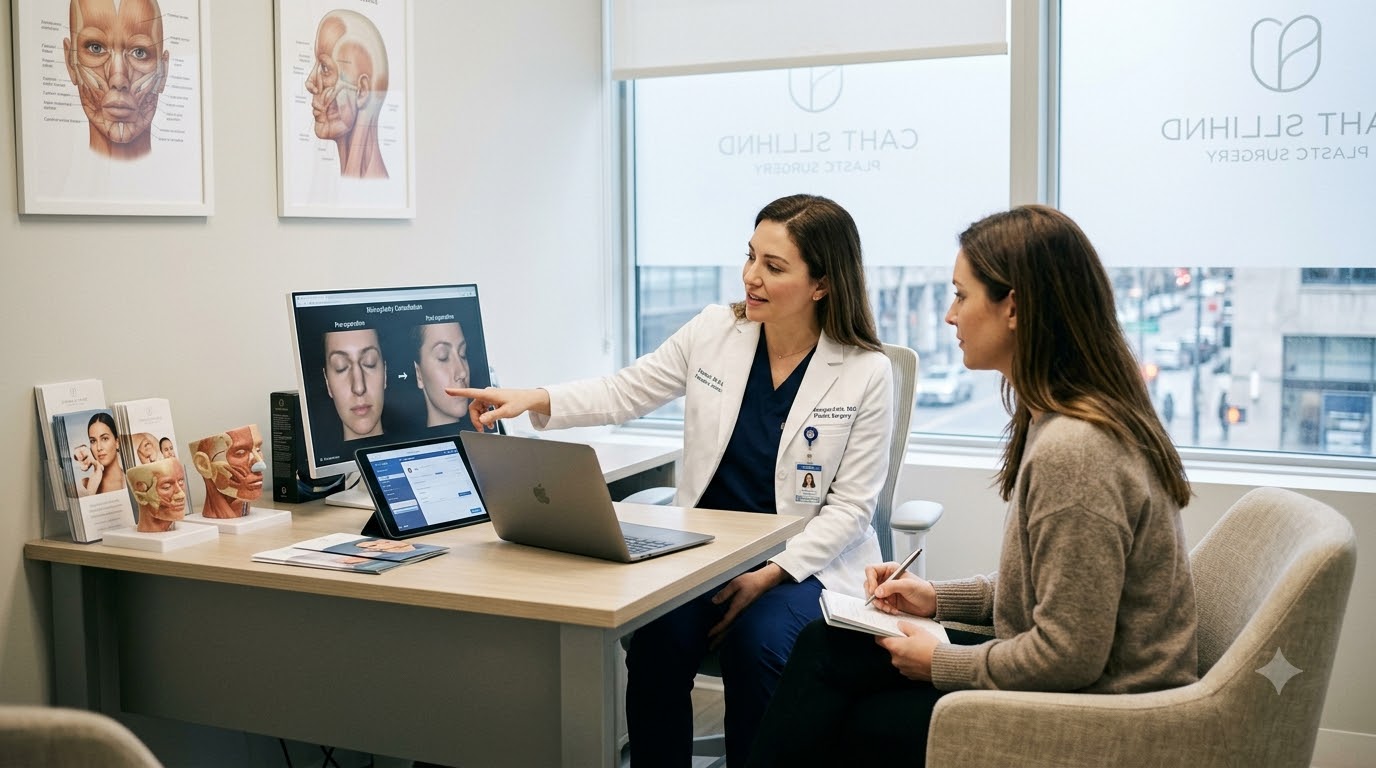
Clinical Educational Overview
The information provided in this article is for general educational purposes only and must not replace an individualised, face-to-face consultation with an appropriately qualified, registered medical practitioner. Under guidelines set by the Australian Health Practitioner Regulation Agency (AHPRA) and the Medical Board of Australia, a formal referral from an independent General Practitioner (GP) is mandatory prior to booking an initial consultation for any cosmetic surgical procedure. Furthermore, a mandatory cooling-off period of at least seven days must elapse following your clinical consultation before any procedure can be scheduled.
When people think about cosmetic surgery, the conversation often revolves around numbers, sizes, or specific dimensions. However, experienced medical practitioners approach surgical planning from a very different perspective. Rather than focusing on arbitrary size goals, modern clinical care centres on human anatomy, structural balance, and natural proportions.
Deciding to undergo an invasive procedure requires a clear understanding of how any proposed changes will fit with your existing physical frame. When individuals research accredited clinical teams offering plastic surgery gold coast services, the initial evaluation focuses heavily on personal anatomical ratios rather than standard templates. Looking at the body as an interconnected whole helps patients form realistic expectations and make safe, well-informed health decisions.
Understanding Individual Anatomical Frameworks
Every person has a unique physical structure defined by skeletal width, muscle shape, and tissue elasticity. What creates visual balance on one body frame may look out of place or cause physical strain on another.
During a consultation, practitioners examine several key anatomical factors:
- Skeletal Structure: The width of the shoulders, ribcage, and pelvis sets the permanent boundaries for any physical adjustments.
- Tissue Elasticity: The health and flexibility of the skin envelope determine how well it adapts to new contours over time.
- Muscular Contours: Underlying muscle tone shapes the body’s natural lines and affects how surgical results settle during recovery.
By evaluating these factors together, doctors ensure that any surgical plan works with your natural frame rather than trying to force an artificial shape.
Australian Regulations and Patient Safeguards
Cosmetic procedures in Australia are bound by strict legal safeguards established by AHPRA. These rules exist to protect patient health and ensure that surgical choices are made thoughtfully.
The essential regulatory steps include:
- Mandatory GP Referral: You must see an independent General Practitioner first. This step ensures an unbiased doctor reviews your overall physical and mental health before you meet a surgeon.
- Seven-Day Cooling-Off Period: After your consultation with a surgeon, law requires a waiting period of at least seven days. This gives you time to consider the risks, financial costs, and personal commitments without feeling rushed.
- Suitability Assessments: Practitioners conduct psychological screenings to ensure expectations are realistic and to check for conditions such as body dysmorphic disorder (BDD).
Candidate Suitability and Health Risks
Invasive surgery is a serious medical step, and suitability depends on objective physical health rather than personal preference alone.
Physical Suitability Criteria
Suitable candidates should maintain a stable weight for several months prior to surgery. Significant weight changes after an operation can stretch tissues and alter proportional results. Candidates must also be in good general health, free from active conditions that slow down wound healing. Ceasing nicotine use well in advance is essential due to severe blood flow and healing risks. Finally, patients must understand that surgery refines natural shapes but cannot achieve perfect symmetry.
Understanding Surgical Risks
All invasive procedures performed under sedation or general anaesthesia carry inherent risks that require careful thought:
- Temporary swelling, bruising, and fluid collection (seroma) around incision sites.
- Changes in skin sensation or nerve numbness along treated areas.
- Visible scarring, which varies based on individual genetic healing.
- Natural asymmetry or contour irregularities over time.
- General surgical risks, including infection, delayed healing, or adverse reactions to anaesthetic agents.
The Recovery Phase and Structural Settling
Achieving a safe and predictable outcome depends heavily on what happens during recovery. Tissues require six to twelve months to heal, remodel, and settle into their final position.
Following all post-operative instructions given by your care team is vital. This includes wearing supportive compression garments to manage swelling, resting adequately, and avoiding strenuous exercise until cleared by your doctor. Approaching surgery with an emphasis on proportion, respecting legal safeguards, and maintaining clear communication with your medical team ensures a safe and informed experience.
References
- Australian Health Practitioner Regulation Agency (AHPRA): Guidelines for Registered Medical Practitioners Who Perform Cosmetic Surgery and Reconstructive Procedures.
- Australian Society of Plastic Surgeons (ASPS): Patient Safety Standards and Clinical Guidelines.
- Royal Australasian College of Surgeons (RACS): Code of Conduct and Patient Informed Consent Standards for Invasive Surgery.

