
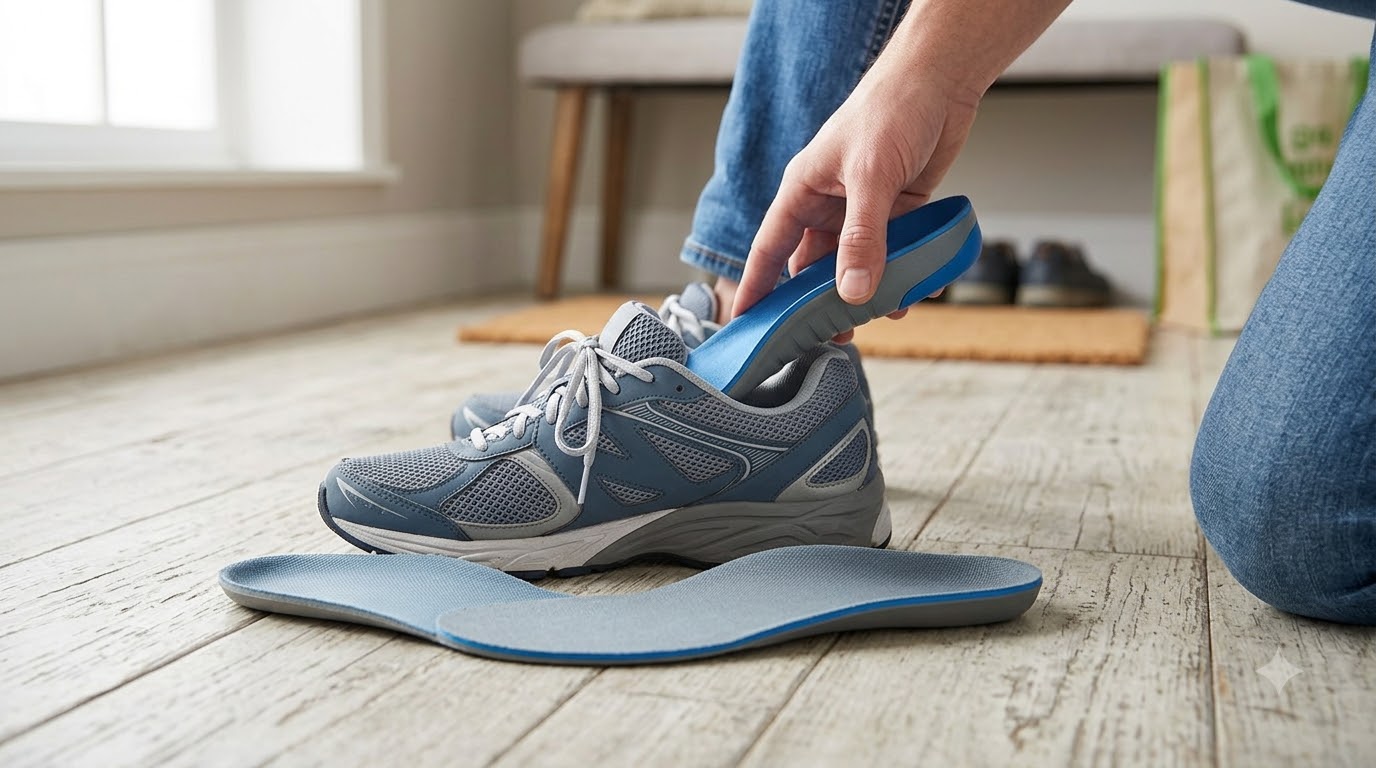
Every step taken during daily life requires a coordinated effort between bones, joints, muscles, and soft tissue structures. Whether walking to the office, navigating weekend trails, or pacing through a morning run, the feet serve as the primary contact interface between human anatomy and the ground. While walking generates ground impact forces roughly equivalent to one to one-and-a-half times total body weight, transitioning to a running stride elevates those forces to nearly three times body weight with every heel strike or forefoot landing.
When subtle structural misalignments or muscular fatigue exist, these increased physical loads can disrupt healthy kinetic movement. Through the prescription of tailored custom orthotics, Brisbane podiatrists help offload strained tendons, support natural arch mechanics, and maintain comfortable mobility by identifying areas of excess pressure early.
How Movement Mechanics Shift from Walking to Running
Although walking and running appear to be simple variations of the same forward movement, their underlying biomechanics differ significantly. Understanding these shifts highlights why foot support must be adaptable rather than rigid.
During a standard walking gait, one foot remains in contact with the ground at all times, creating a stance phase that allows impact forces to dissipate relatively slowly across the heel, arch, and forefoot. The foot acts first as a flexible shock absorber as the heel strikes, then transforms into a rigid lever to push the body forward.
When transitioning to a running stride, several mechanical changes occur simultaneously:
- The Flight Phase: Both feet leave the ground during brief airborne moments, eliminating double support and concentrating total impact force onto a single landing leg.
- Shorter Ground Contact Time: The foot must absorb higher peak impact forces in a fraction of the time required during walking, placing greater physical demand on the plantar fascia, Achilles tendon, and calf muscles.
- Altered Foot Strike Angles: Depending on speed and individual running style, foot strike patterns often shift from a mid-heel landing toward a midfoot or forefoot contact point, altering where mechanical load concentrates along the sole.
If the foot lacks stability or experiences excessive inward arch collapse (hyper-pronation) during this accelerated loading cycle, rotational forces travel upward into the ankles, shins, knees, and hips.
Modern Orthotic Philosophy: Guidance Over Immobilisation
Historical approaches to orthotic therapy often relied on rigid, heavy devices designed to lock the foot into a static position. Modern podiatric practice, however, recognises that human feet are designed to move, adapt, and flex.
Prescription foot orthoses are engineered to guide foot motion and manage physical force distribution rather than restrict natural movement. By capturing precise digital 3D models of the patient’s foot anatomy, podiatrists can incorporate specific structural features based on activity demands:
- Material Density Calibration: Softer, highly shock-absorbent EVA materials can be selected for high-impact running devices, while thinner, carbon-fibre or polypropylene shells fit discreetly into lower-profile daily walking shoes.
- Targeted Offloading: Incorporating subtle forefoot cut-outs, heel cups, or medial arch contouring redistributes physical pressure away from irritated structures, such as inflamed plantar fascia or sensitive metatarsal heads.
- Torsional Control: Supporting the midfoot structure prevents excessive collapse without stopping the natural windlass mechanism required for efficient push-off.
Integrating Footwear, Strengthening, and Load Management
While prescription orthotics provide essential structural guidance, they represent just one part of a comprehensive lower limb health strategy. Achieving long-term comfort across both walking and running requires a holistic approach:
- Footwear Alignment: An orthotic device functions as an internal interface inside a shoe. Pairing prescription inserts with stable, appropriate footwear ensures the device sits flat and performs as intended.
- Intrinsic Muscle Strengthening: Performing targeted exercises, such as calf raises, toe scrunches, and single-leg balance drills, reinforces the underlying muscular support system of the foot and leg.
- Gradual Training Progression: When increasing running distance or transitioning to new activity levels, physical load should be stepped up incrementally to give bone and soft tissue adequate time to adapt.
By treating orthotic support as a dynamic tool tailored to individual activity levels, active individuals can protect their joint longevity, reduce exercise-related fatigue, and continue moving comfortably from daily walking to high-performance running.

